By Jeremy Varner
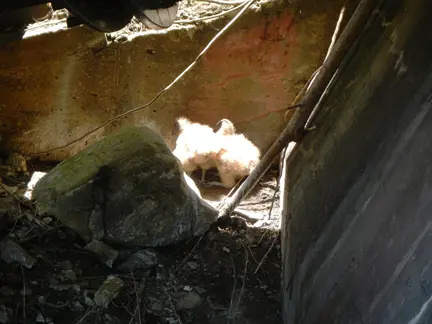
Two black vulture chicks in their nest
On a rainy Monday this past spring, I was driving my son to school when we were delayed behind a garbage truck. We started talking about garbage collectors and waste management. Given how hard the garbage men work outside all day in the rain or heat, he thought they should earn $100,000/year. My heart swelled with pride that he saw their value, but I had to break it to him that they don’t get paid that much.
Consistent, efficient waste management is a critical component of modern society. If the trash doesn’t get collected for a week, we’ll all be frustrated. If the delay reaches a month, there will be mass protests in the streets. But when the system works, we barely notice.
Vultures are nature’s most identifiable garbage processors. Sure, coyotes will scavenge from time to time, and there are likely thousands of insect species that will eat decomposing material, but when most of us think about what cleans up the mess when a wild animal dies, it’s really the vultures.
In Georgia we have two vulture species, the black vulture (Coragyps atratus) and the turkey vulture (Cathartes aura). Both species live across much of the Western hemisphere, from the northern United States all the way to Patagonia. The black vulture is all black with a bare, black head. The turkey vulture has dark brown feathers with a bare, red head. They are both large birds with wingspans around five feet for the black and six feet for the turkey. When they are soaring on warm air currents, they look majestic and can be confused for eagles or hawks. You can identify the flying vultures by their short heads and tails compared to their long wings. The black vultures are mostly black, but their wing tips are white. On the turkey vultures the white feathers reach to about their elbows.
Vultures are highly social birds who like to hang out in groups, but they don’t talk much, and when they do it sounds harsh to human ears — usually just some raspy grunts or hisses. Their nests aren’t much to speak of either. The one time I saw a black vulture nest, it was just a couple of gangly chicks covered in white fluffy down and sitting on a bare rock with a couple of sticks spread around. Talk about some tough birds.
That toughness starts in their guts, with stomach acid just above pH 0. Recall the pH scale ranges from pure acid at 0 to pure base at 14 with neutral at 7. It is a logarithmic scale, so each step is an increase in order of magnitude, or ten times. Human stomach acid is around pH 2, so the vulture’s stomach acid is about two orders of magnitude, or 100 times, stronger than ours. It’s no surprise then that they can eat some rotting roadkill or poorly washed lettuce and not think twice about cyclosporiasis.
Working in waste management is unlikely to land you on the cover of Forbes. Birds will be featured in many of the arts and crafts at Grant Park’s Summer Shade Festival (August 22 and 23), but vultures aren’t likely to be popular. Nonetheless, I’d be loathe to live anywhere without vultures or sanitation workers. We should always respect and value those who do the work that nobody wants to do but needs to be done.